


Archive interview from February 2021. Matti Posio describes Lännen Media’s editorial direction at the time and the business stories his newsroom was looking for. The newsroom structure, roles and contact details may have changed. Photo: Nea Alanen.
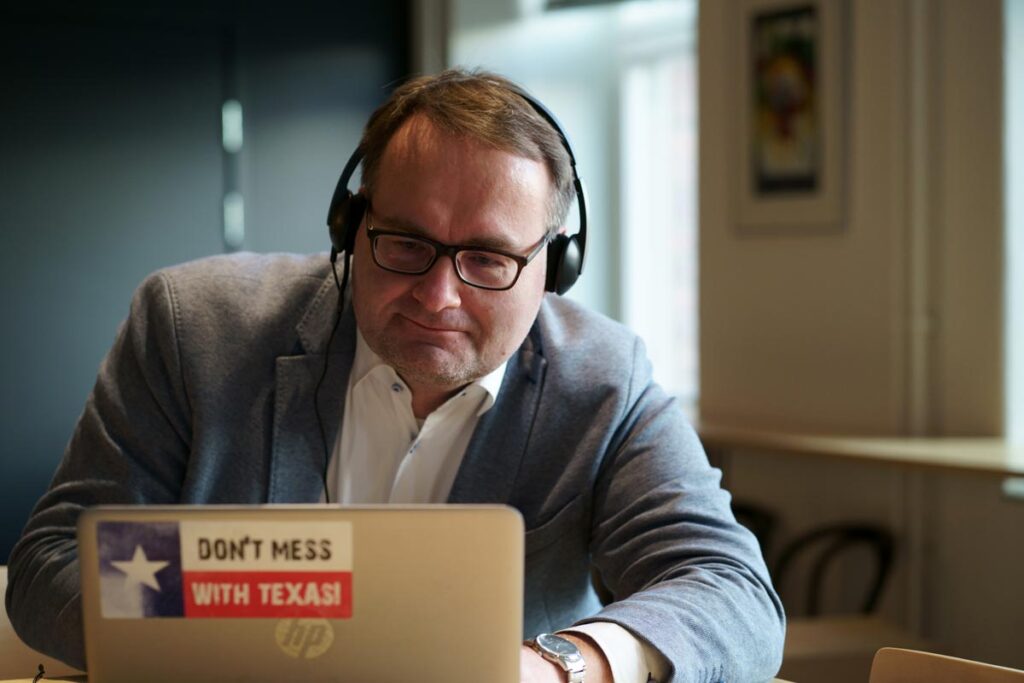
In our interview series, journalists explain their editorial approach. Photo: Nea Alanen
In February 2021, Lännen Media sharpened its focus after a major restructuring. The shared newsroom shifted from tracking daily news towards in-depth coverage of major issues and compelling true stories. Editor-in-chief Matti Posio explains the change at the newsroom serving nine newspapers.
When Sanoma announced in February 2020 that it would buy Aamulehti and Satakunnan Kansa, among other titles, from Alma, Matti Posio knew the landscape had changed overnight.
Lännen Media had produced stories for 11 to 12 regional papers since 2014. Its virtual newsroom handled both daily news and themed coverage for its owners. Aamulehti and Satakunnan Kansa were among the largest because of Alma’s role.
The deal was substantial by Finnish standards. During the transition the Lännen Media board met 11 times, more often, Posio says, than in any previous year. The newsroom’s remit, composition and editorial focus all changed substantially.
The team of six journalists would provide analysis and perspectives to complement the partner papers’ regular news, with a substantial package of serious journalism at weekends.
Posio describes the six as some of the country’s best journalists, hungry for stories and with something to offer. He sees the new approach as an investment in quality by independent regional papers, even under financial pressure and amid restructuring in the media industry. The papers would continue to carry routine news, drawing on the news agency and a print-production centre set up at Kainuun Sanomat.
Posio says it is “more important to take on a manageable amount of original work and do it well and boldly than to keep producing more of the same at a faster pace”. With funding models and consumer habits changing, standing still is hardly the safest choice.
Maintaining editorial quality had taken work during the previous year of the pandemic. Under the new model no single paper dominated. The three largest, Turun Sanomat, Kaleva and Ilkka-Pohjalainen, were roughly the same size.
“We used to cover everything. We reacted to news, produced long weekend investigations, wrote about everyday life and culture, did fast online stories and slower subscriber features, and ran columns and opinion pieces. Now we will focus on original, high-quality reporting that readers can get by subscribing to one of our partner papers,” Posio says.
The fourth most-cited source
Lännen Media was known for breaking national news. In 2019 it was the Finnish News Agency’s fourth most-cited source.
The newsroom also produced features and themed packages on tourism, food, housing, travel, transport and health. The themed coverage would continue.
The newsroom had most recently employed 29 people. The papers reached up to two million people in Finland when their digital services were included.
The combined daily print readership remained at 620,000 after Aamulehti and Satakunnan Kansa left. Circulation data put it in the same order of magnitude as Helsingin Sanomat, with most readers living in and around regional centres elsewhere in Finland.
The newsroom shrank to about a fifth of its former size
When the two papers left, the owners changed how they divided the work. Turun Sanomat, Kaleva, Ilkka-Pohjalainen, Lapin Kansa, Hämeen Sanomat, Keskipohjanmaa, Kainuun Sanomat, Länsi-Suomi and Forssan Lehti chose to focus their own reporters on local coverage. They would rely more on STT for daily national and international news. The Lännen Media producer would commission features from freelancers.
The newsroom fell to six journalists, close to a fifth of its previous size. The shared newsroom had employed up to 40 when it started in 2014. The changes forced a clearer focus, which Posio saw as an opportunity.
He was pleased that the remaining papers avoided broad redundancy proceedings as a result. Journalists returned to their home newsrooms and stopped reporting for other papers alongside their own. Lännen Media had provided training and rotations for many of them.
“It hasn’t been entirely painless. If we hadn’t had the bigger newsroom before, we’d see this new phase as a really interesting one,” Posio says. “And it still is.”
Original reporting that readers cannot find elsewhere
The new Lännen Media would serve nine regional papers with a narrower focus. The newsroom would cover and explain world events in ways readers would not find in other media. The papers would run the stories online for subscribers and in their morning print editions.
“A smaller newsroom means moving from routine coverage to our own reporting and good writing,” Posio says.
“STT follows developing events morning and evening. That leaves a broad field in national and international politics and economics. We will cover the biggest subjects and angles across the boundaries of traditional beats.”
Each journalist had their own specialist areas, including domestic politics, security policy, the economy, major criminal cases, science and wider trends affecting people across Finland.
Posio was known as a specialist in international politics, particularly Russia. In the new model he said he would work mainly on substantial weekend stories. “I’ll keep explaining what’s going on in the US and Russia. Someone called me a senior reporter. That sounded frightening at 47, but it helps that I can remember quite a few elections.”
“We want to tell more stories about businesses”
Posio wanted stronger economic coverage, both about public finances and about businesses.
Public-sector organisations and research institutes usually give journalists plenty of information, he says. Businesses could be more willing to come forward. They are often where innovation happens and where growth creates opportunities for the future.
Companies often pitch stories that matter to them, such as a major order, the result of an important project or even a new website. When the press release gets no coverage, they conclude that journalists are not interested.
“They are interested,” Posio says, though what interests them may be different from what companies expect.
News reporting has adopted techniques once associated with magazines and evening papers’ websites. It tells stories with people at the centre and room for difficulty and surprise.
“Modern media looks for true stories. We’d like to tell more of them about companies: what everyday work is like and how it affects society. But often we hit a wall. What the company wanted after all was lunch and a general background conversation.”
In Posio’s experience, executives and experts can tell these stories well when they feel able to do so. A quality system that took years to put in place may not be a story on its own. The setbacks, surprises, discoveries and successes along the way might be.
“Few executives are willing to explain a process while it is still under way. It isn’t interesting if everything always goes well. The hero sometimes falls and gets up again. Communications works better when you see it as an ongoing process with different stages.”
“I’d like businesses to recognise that editorial media has a role beyond campaigns and spin. Ninety-nine per cent of releases go in the bin. A release is useful on a company website, where a journalist can find it when looking for information. It is worth stepping forward properly rather than just issuing announcements about individual events.”
Topics Lännen Media planned to cover in February 2021
- Finland’s COVID strategy and vaccines
- Major issues in the coming parliamentary session
- Bitcoin and the pitfalls of modern investing
- Interviews with leading figures in national politics
- Pandemic-era surprises in the business economy
- The background to events in Russia and a murder case
- Could the new US president succeed?
- Why men should make six friends
- Whether to worry about health information from DNA tests
- New ways to exercise in winter, the future of e-bikes, looking after bed linen and whether baldness can be prevented